Boats and the Fleet
The Rock Harbor Charter Fleet
A guide to the Rock Harbor charter fleet: how the boats differ, what a six passenger charter includes and what to ask before you book.
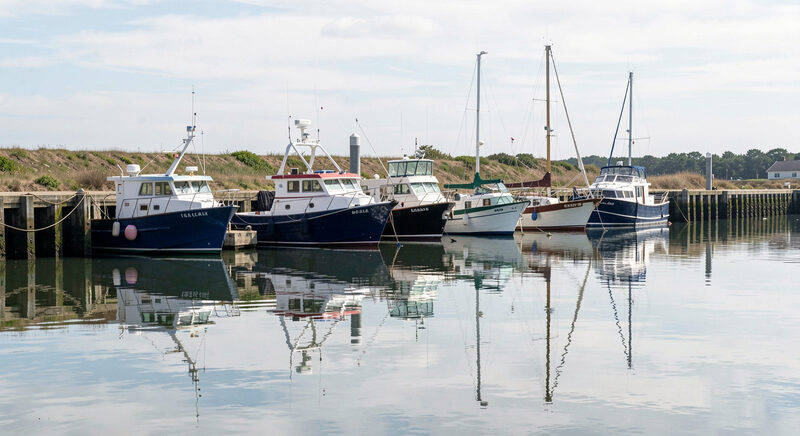
The Rock Harbor charter fleet is a row of small sportfishing boats that sail from a tidal basin on the Orleans and Eastham line, fishing the waters of Cape Cod Bay for striped bass, bluefish and bluefin tuna. It is not a single company. It is a collection of independent captains and boats, each with its own vessel, its own style and its own way of reading the water, sharing one harbor and one fishery.
For a visitor, that independence is both the charm and the puzzle of booking a charter here. There is no central brand and no single standard. There are boats of different sizes, captains with different specialities and days that can be shaped to very different groups. This guide explains how the fleet is organised and what a charter actually includes, so a guest knows what they are choosing between.
A fleet of independent boats
The boats that fish from Rock Harbor range from compact center consoles to larger sportfishing boats with cabins and towers. Some are set up primarily for inshore work on the flats and shoals, where light tackle and casting come into their own. Others are equipped for longer runs into deeper water in pursuit of bluefin tuna. Most do a bit of both, adjusting to the season and to what the guests want.
Because the boats are independent, the experience varies. A captain who has fished the bay for decades brings a depth of local knowledge that is hard to put a price on, and that knowledge is the real product of a charter. The guide to choosing a charter boat turns that variation into practical questions a guest can ask.
The six-pack limit and what it means
Almost every boat in the fleet operates under the six-passenger limit that governs uninspected charter vessels in the United States. That means no more than six guests, and often fewer. The result is an intimate day. There is room to fish without crowding, the captain and mate can give each person attention, and the trip can be adapted to the group rather than the group squeezed into a fixed schedule.
For families and small groups of friends, the six-pack model is ideal. It also means that a full boat is a small number of people, so popular dates go early in the season. Booking ahead is part of getting the day you want.
What is provided and what to bring
Most charters provide the essentials: the boat, the captain and mate, rods and reels, terminal tackle, bait and the licences that cover fishing from a for-hire vessel. That last point is worth knowing, because in Massachusetts an angler fishing aboard a permitted charter boat is generally covered by the boat's permit rather than needing an individual state saltwater permit. The guide to Massachusetts saltwater rules explains the detail.
Guests usually bring their own food and drink, clothing for the weather, sun protection and a cooler for any fish they plan to keep. A camera, and a willingness to listen to the captain, round out the list. Tackle is not something a first-time guest needs to buy.
What the day is built around
A charter day at Rock Harbor is built around the tide before anything else. Because the harbor only opens for a few hours around high water, the sailing time is set by the water rather than by the clock. A half-day trip fits inside one tidal window. A full-day trip has to plan around the harbor closing in the middle of the day, which is one reason longer trips often run further afield.
Within that frame, the captain decides where to fish based on the season, the recent reports and the conditions on the day. An early-season trip may focus on the first bass on the flats; a midsummer trip may chase bluefish or look for tuna; an autumn trip may work the shoals for feeding bass. The month by month guide to the season sets out what to expect.
The dock and the season
The fleet operates from a small harbor with limited dockage, and the season is short. Boats generally run from late spring into autumn, following the fish and the weather, and many captains work other jobs in the winter. At the height of summer the harbor is busy, with boats leaving on the tide and returning on the next one, and the dock is the place where guests meet crews and the day's plans are made.
That seasonal rhythm is part of what makes a charter here feel like a genuine slice of working waterfront rather than a tourist attraction. The boats are there to fish, the captains are there because they want to be on the water, and the whole operation slows and stops when the fish move south and the cold sets in. A guest who books in the middle of the season gets to see the harbor at its most alive.
What a charter is not
A charter is not a guarantee of fish, and no honest operator presents it as one. It is a well-run day on productive water, with a captain working to put guests on fish and a mate helping them land what they hook. Some days are memorable, some are slow, and the ocean decides which. What a good boat controls is the quality of the effort and the safety of the day.
Understanding that is part of enjoying a charter. The reward is a small, personal day on one of the best fishing grounds on the East Coast, with people who know it well. The boats and fleet section covers the rest of what a guest should know, and the guide to a first charter trip walks through how the day actually unfolds.